Microsoft is betting that two AI models working together are better than one, and it just shipped the proof.


Venture funding reached a record-shattering $300 billion in Q1 2026 as investors pivot toward agentic AI and energy infrastructure, marking a new industrial era.


The opening quarter of 2026 has officially redefined the parameters of global investment. For years, the financial community engaged in a spirited debate regarding whether the artificial intelligence surge was a sustainable transition or a localized bubble. The answer arrived this week with absolute clarity: venture capital investment shattered all previous records, reaching a staggering $300 billion in just three months. This is not merely a recovery in the startup ecosystem. It is a fundamental reallocation of capital toward the physical and computational foundations of the next century.
What makes this $300 billion figure particularly compelling is its specific destination. We are witnessing a profound shift in where “smart money” is placing its bets. The capital that once sought high-margin software-as-a-service models is now flowing into two distinct, high-stakes areas: the autonomous agentic layer and the massive energy infrastructure required to keep the lights on. For the sophisticated investor, the narrative has shifted from the application layer to the enabling layer. The real question is no longer who is building the cleverest model, but who is building the infrastructure that allows those models to operate at scale.
To understand why $300 billion in venture capital is flowing so aggressively, we must examine the “bottleneck theory” of innovation. In 2024 and 2025, the primary constraint on artificial intelligence development was model training. The goal was simply to make the models smarter and more coherent. In 2026, that constraint has migrated toward execution and operational scale.
We are entering the “Agentic Era.” Investors are no longer funding simple interfaces that answer questions. They are funding autonomous systems that perform work. This is the industrialization of intelligence. The venture community is betting heavily on startups that can integrate AI into legacy workflows without human oversight. This shift is creating a unique inflection point for infrastructure providers who were previously overlooked. The market is no longer satisfied with software that lacks a physical or structural competitive moat.
A significant portion of the Q1 funding record is attributed to massive, late-stage “mega-rounds.” In the first three months of 2026, we saw more than fifty rounds exceeding $1 billion each. This suggests a “flight to quality” where venture firms are concentrating their capital into a handful of winners rather than spreading it across a broad field of early-stage experiments.
This concentration of capital is a signal of maturity. Institutional investors, including sovereign wealth funds and massive private equity firms, are participating in these rounds at levels previously reserved for public markets. They are looking for companies that have moved beyond “proof of concept” and are now focused on “proof of scale.” The current environment favors startups that own their data pipelines and have secured long-term hardware commitments.
Perhaps the most surprising sub-sector of the Q1 record is the surge in “Energy-Tech” funding. As the demand for computation grows, the primary constraint is no longer the chip: it is the power grid. Nearly 20 percent of the $300 billion invested in Q1 went toward startups focused on small modular reactors (SMRs), advanced battery storage, and grid-edge management.
Investors have realized that an AI model is only as good as the energy available to run it. Companies that can provide reliable, “behind-the-meter” power to data centers are commanding massive premiums. This is a structural moat. If a startup can solve the cooling or power problem for a hyperscale facility, they essentially hold a key to the entire industry’s growth.
We are also seeing a rise in “Sovereign AI Clouds.” Governments around the world are now funding domestic startups to build localized, secure infrastructure that does not depend on international tech giants. This trend is driving massive venture rounds in regions like Northern Europe and the Middle East. These startups are focusing on specialized hardware that operates with extreme energy efficiency, aiming to reduce the carbon footprint of massive inference clusters.
Beyond the data center, the “AI Boom” is finding a fertile home in life sciences. Bio-AI startups saw a 150 percent increase in funding compared to the previous quarter. The thesis here is simple but profound: the same transformer architectures that mastered human language are now being applied to the “language” of proteins and genetics.
This is not just speculative science. We are seeing companies move from initial molecule design to clinical trials in less than twelve months, a process that used to take years. The moat in this sector is the proprietary “wet-lab” data that reinforces the AI models. By combining digital simulation with physical validation, these startups are creating a feedback loop that legacy pharmaceutical giants are finding difficult to replicate.
For venture capital to hit $300 billion in a single quarter, there must be a light at the end of the tunnel for liquidity. The record funding in Q1 2026 is being driven, in part, by the expectation of a massive IPO wave in the second half of the year.
This liquidity cycle is essential for maintaining the momentum of the venture market. Without a clear path to an exit, the $300 billion surge would eventually stall. However, the current indicators suggest that the “exit window” is wider than it has been in five years.
Despite the record funding and glowing headlines, the “Investment Analyst” must remain grounded in the reality of execution. The primary risk in the current venture market is the “Valuation Trap.”
As we analyze the broader market, a clear divide is emerging between companies that own their “stack” and those that remain asset-light. The $300 billion in Q1 funding is heavily skewed toward the former.
The record-shattering $300 billion in Q1 venture funding represents the beginning of the industrial phase for artificial intelligence. We are moving beyond the era of experimentation and into the era of large-scale deployment. This is the moment where the “digital” finally meets the “physical.”
For the sophisticated investor, the strategy should focus on three essential pillars:
The boom of 2026 is not about hype: it is about the build-out. We are witnessing the birth of the physical AI economy. While the headline $300 billion number may capture the news, the real value is being created in the quiet, record-breaking execution of the companies that are actually building the hardware and autonomous systems of the future. The infrastructure being funded today will be the essential utility of tomorrow.
Microsoft is betting that two AI models working together are better than one, and it just shipped the proof.
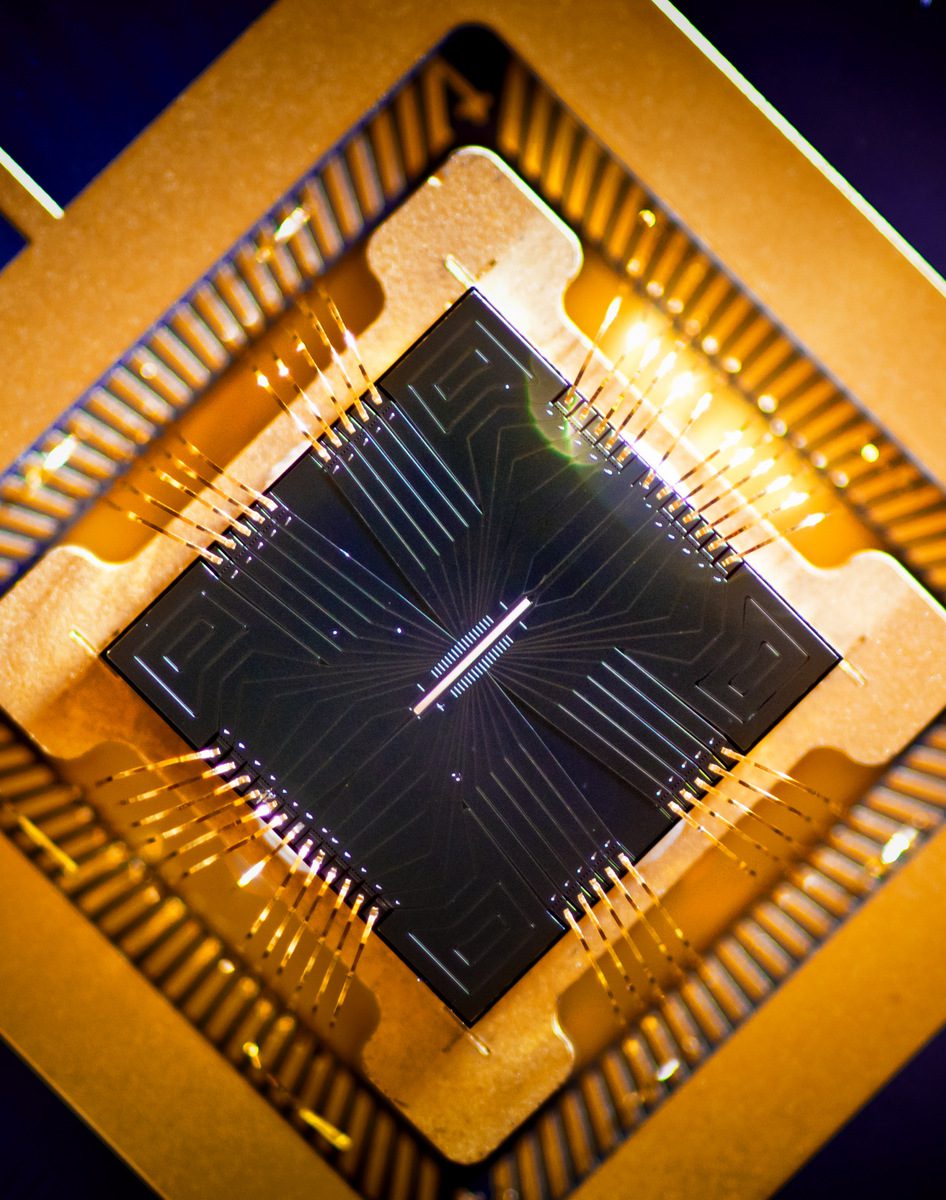
IonQ just shattered the $100 million revenue ceiling, proving that quantum computing is no longer a science experiment but a massive commercial reality for 2026.
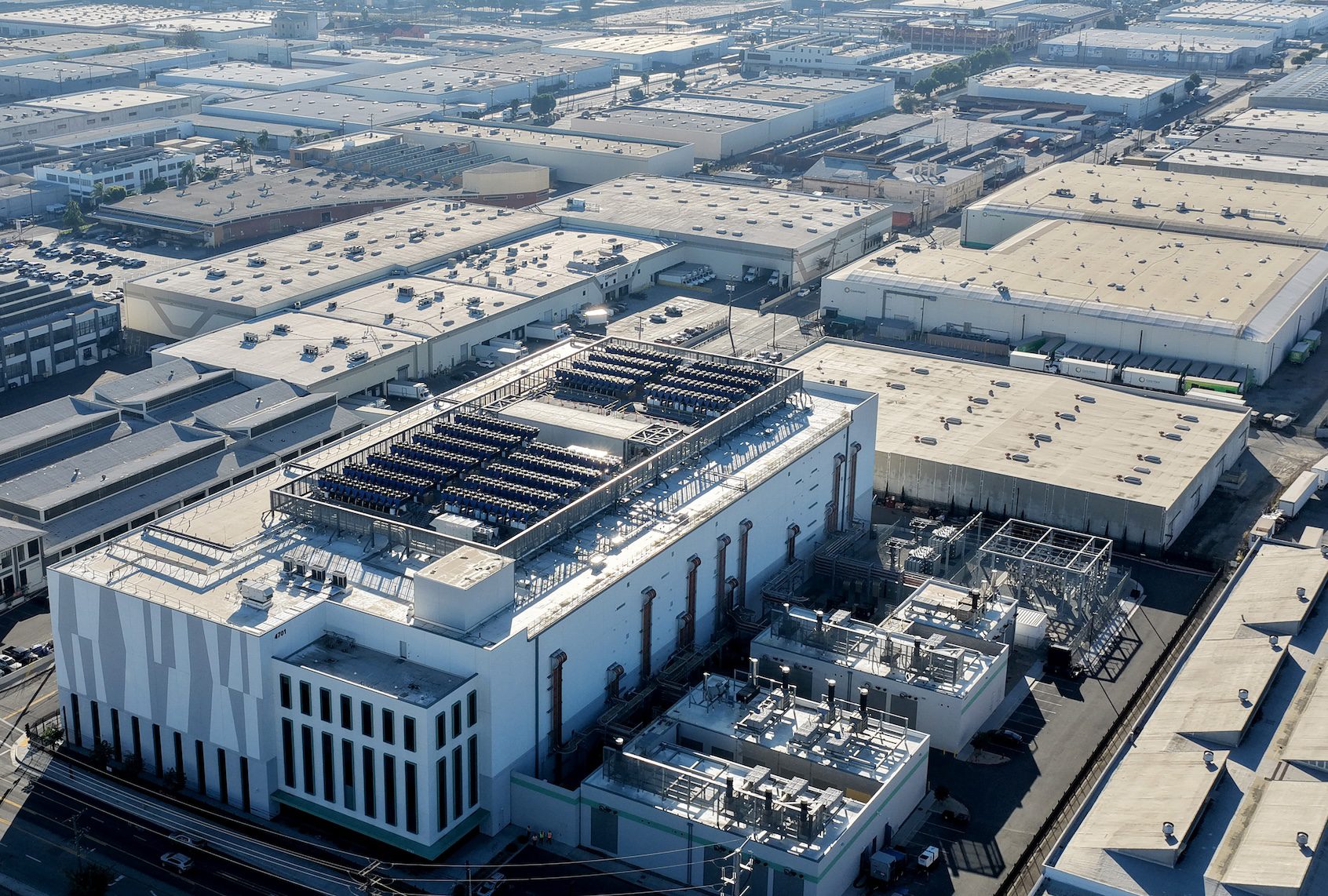
Tariff chaos and an AI reality check are crushing tech valuations. Discover why 2026’s market whiplash is actually a prime contrarian buying opportunity.
Venture funding reached a record-shattering $300 billion in Q1 2026 as investors pivot toward agentic AI and energy infrastructure, marking a new industrial era.
The opening quarter of 2026 has officially redefined the parameters of global investment. For years, the financial community engaged in a spirited debate regarding whether the artificial intelligence surge was a sustainable transition or a localized bubble. The answer arrived this week with absolute clarity: venture capital investment shattered all previous records, reaching a staggering $300 billion in just three months. This is not merely a recovery in the startup ecosystem. It is a fundamental reallocation of capital toward the physical and computational foundations of the next century.
What makes this $300 billion figure particularly compelling is its specific destination. We are witnessing a profound shift in where “smart money” is placing its bets. The capital that once sought high-margin software-as-a-service models is now flowing into two distinct, high-stakes areas: the autonomous agentic layer and the massive energy infrastructure required to keep the lights on. For the sophisticated investor, the narrative has shifted from the application layer to the enabling layer. The real question is no longer who is building the cleverest model, but who is building the infrastructure that allows those models to operate at scale.
To understand why $300 billion in venture capital is flowing so aggressively, we must examine the “bottleneck theory” of innovation. In 2024 and 2025, the primary constraint on artificial intelligence development was model training. The goal was simply to make the models smarter and more coherent. In 2026, that constraint has migrated toward execution and operational scale.
We are entering the “Agentic Era.” Investors are no longer funding simple interfaces that answer questions. They are funding autonomous systems that perform work. This is the industrialization of intelligence. The venture community is betting heavily on startups that can integrate AI into legacy workflows without human oversight. This shift is creating a unique inflection point for infrastructure providers who were previously overlooked. The market is no longer satisfied with software that lacks a physical or structural competitive moat.
A significant portion of the Q1 funding record is attributed to massive, late-stage “mega-rounds.” In the first three months of 2026, we saw more than fifty rounds exceeding $1 billion each. This suggests a “flight to quality” where venture firms are concentrating their capital into a handful of winners rather than spreading it across a broad field of early-stage experiments.
This concentration of capital is a signal of maturity. Institutional investors, including sovereign wealth funds and massive private equity firms, are participating in these rounds at levels previously reserved for public markets. They are looking for companies that have moved beyond “proof of concept” and are now focused on “proof of scale.” The current environment favors startups that own their data pipelines and have secured long-term hardware commitments.
Perhaps the most surprising sub-sector of the Q1 record is the surge in “Energy-Tech” funding. As the demand for computation grows, the primary constraint is no longer the chip: it is the power grid. Nearly 20 percent of the $300 billion invested in Q1 went toward startups focused on small modular reactors (SMRs), advanced battery storage, and grid-edge management.
Investors have realized that an AI model is only as good as the energy available to run it. Companies that can provide reliable, “behind-the-meter” power to data centers are commanding massive premiums. This is a structural moat. If a startup can solve the cooling or power problem for a hyperscale facility, they essentially hold a key to the entire industry’s growth.
We are also seeing a rise in “Sovereign AI Clouds.” Governments around the world are now funding domestic startups to build localized, secure infrastructure that does not depend on international tech giants. This trend is driving massive venture rounds in regions like Northern Europe and the Middle East. These startups are focusing on specialized hardware that operates with extreme energy efficiency, aiming to reduce the carbon footprint of massive inference clusters.
Beyond the data center, the “AI Boom” is finding a fertile home in life sciences. Bio-AI startups saw a 150 percent increase in funding compared to the previous quarter. The thesis here is simple but profound: the same transformer architectures that mastered human language are now being applied to the “language” of proteins and genetics.
This is not just speculative science. We are seeing companies move from initial molecule design to clinical trials in less than twelve months, a process that used to take years. The moat in this sector is the proprietary “wet-lab” data that reinforces the AI models. By combining digital simulation with physical validation, these startups are creating a feedback loop that legacy pharmaceutical giants are finding difficult to replicate.
For venture capital to hit $300 billion in a single quarter, there must be a light at the end of the tunnel for liquidity. The record funding in Q1 2026 is being driven, in part, by the expectation of a massive IPO wave in the second half of the year.
This liquidity cycle is essential for maintaining the momentum of the venture market. Without a clear path to an exit, the $300 billion surge would eventually stall. However, the current indicators suggest that the “exit window” is wider than it has been in five years.
Despite the record funding and glowing headlines, the “Investment Analyst” must remain grounded in the reality of execution. The primary risk in the current venture market is the “Valuation Trap.”
As we analyze the broader market, a clear divide is emerging between companies that own their “stack” and those that remain asset-light. The $300 billion in Q1 funding is heavily skewed toward the former.
The record-shattering $300 billion in Q1 venture funding represents the beginning of the industrial phase for artificial intelligence. We are moving beyond the era of experimentation and into the era of large-scale deployment. This is the moment where the “digital” finally meets the “physical.”
For the sophisticated investor, the strategy should focus on three essential pillars:
The boom of 2026 is not about hype: it is about the build-out. We are witnessing the birth of the physical AI economy. While the headline $300 billion number may capture the news, the real value is being created in the quiet, record-breaking execution of the companies that are actually building the hardware and autonomous systems of the future. The infrastructure being funded today will be the essential utility of tomorrow.
Microsoft is betting that two AI models working together are better than one, and it just shipped the proof.
IonQ just shattered the $100 million revenue ceiling, proving that quantum computing is no longer a science experiment but a massive commercial reality for 2026.
Tariff chaos and an AI reality check are crushing tech valuations. Discover why 2026’s market whiplash is actually a prime contrarian buying opportunity.

SanDisk reports a blowout Q2 2026 with $3.03 billion in revenue and $6.20 EPS. Despite the stock being down today, the future valuation remains massive.